Saturday, December 16, 2023

I got my HAM radio license. Now what?

I got my HAM radio license. Yes, HAM radio still exists. Yes, you still need a license for it. Why did I do that? 

Well, first-off you get a "call sign" from the US government. Unfortunately, as I came to find out, it's not a cool-sounding code name like Maverick or Iceman, it's just a numbered code that identifies both your "station" (where-ever you're talking or listening from) as well as the operator of the station. The process involves registering with the Federal Communications Commission, the FCC, and taking an exam. If you pass, you get you call sign, and license. The license is just a PDF file somewhere in the the FCC database. I printed and laminated my file because I was super stoked about it. My call sign is KD9ZDY, or "Kilo Delta Niner Zulu Delta Yankee"
Lloyd Bridges and Robert Stack in the film Airplane!
if you want to sound tacticool. 

Without getting into too much detail, "HAM" radio operators are amateur radio transmitters and listeners with enough knowledge to stay within certain frequency boundaries set and enforced by the United States government. Everything from mobile phones, Wifi, television, Bluetooth, radio stations, airline, military and nautical communications is radio. The HAM service gives knowledgeable people a very small scope of all of those radio frequencies and modes to connect for anything, even just to chat or experiment. The licensing process ensures we know what, and what not, we can do "on-the-air" as well as electronics education on how to build and maintain a working station.      

So... I passed my exam, and I was faced with one of those complex thoughts...

"I'm KD9ZDY. Now what?" 

We all have cell phones. I can easily use the internet to talk to a stranger on another continent. What is HAM radio really worth now? There's not an easy answer other than it's a great hobby, and, importantly, it's a mode of remote communication that can continue to operate even when cell, internet, land-line services and electricity are down. 

In fact, this very situation occurred in Hawai'i on the island of Maui this past year. Wild fires burned land-line wires, fiber-optics, high-tension wires as well as cell towers. Communication was completely lost in many areas. However, the Amateur Radio Emergency Service and Hawai'i ARES, a group of civilian HAM's were able to provide critical communications through hand-built, self-sufficient, stations that received and provided radio communications without the need for home electricity or a landline, cellphone or internet plan.     

Thankfully no such emergencies have occurred since I got my license, so I'm still wondering what I'm actually supposed to do with this important government privilege. 

I originally got interested in radio when I bought a Uniden receive-only scanner. I'm interested in aviation, and wanted to listen to airliners and air-traffic-control. A scanner is also great for picking up police communications, as well as listening-in during auto-racing events. Importantly, since it's only a receiver, it's legal for a non-licensed person to have. Using the Uniden, I was able to listen-in on a few HAM "nets", which are basically just radio meetings. 

In my hometown of Kent, Ohio with Netflix on in the background, I casually listened to a nice guy in a town, not far away, explain his antenna construction project to an internet-assisted listener in the United Kingdom who was interested in building his own antenna. This all sounded pretty fun. 

Once I got licensed, and set-up my station, KD9ZDY, I connected with a couple of nets in Chicago. My first contacts were with the Chicago FM Club on a Sunday night social call with a group simply chatting all-things pizza, football and Chicagoland-related. But, perhaps my most significant contact was on frequency 442.725 MHz, a "repeater" (a station that can put local callers in contact with other stations outside of their own station's transmission range, by receiving transmissions on one frequency and repeating them on another). The call sign for the repeater was NS9RC, and it was maintained by the North Shore Radio Club. 

The "net", or group-call, was having a discussion on inexpensive HAM equipment, and I was introduced to a simple Linux-based, single-board processor with different types of HAM software pre-programmed on it. It's called Inovato Quadra, and it costs only $40.00 USD. This Inovato should allow me to enhance my contact capabilities and see a lot of the data and information I'd get from a more expensive HF transceiver, including coordinates, local times as well as wavelength, amplitude and modulation images, or "waterfall" graphics. I'd simply need a cheap PC laptop to run it. Nothing special, basically any laptop, new or used, that can run Windows.


It doesn't end there. Since HAM radio is still a thing, someone invented EchoLink. It's basically radio on the internet. But what it allows you to do is use a computer to contact a station anywhere in the world using the World Wide Web. With Echolink, I can connect to other HAMs even if I'm in a hotel room far removed from my own HAM equipment. It's just another way amateur radio is becoming modernized and built upon by enterprising amateurs and good Samaritans. EchoLink is open-source and free to use for licensed HAM's; only a verification of your license is necessary to connect.

For now, I have a couple of Baofengs: a more powerful 8-watt BF-F8HP and a base-model 4-watt UV-5R, which is still a great device. The Baofeng (A big brand in radio) is only suitable for licensed HAMs due to its transmitting power. Baofengs are "transceivers," meaning they can transmit and broadcast on many frequencies and potentially interfere with restricted bands. So, while they can be used as simple walkie-talkies, they're not meant to be baby monitors or kids' toys. 

However, for licensed operators, the Baofeng would be a valuable piece of safety equipment for boaters, hikers and campers who venture out of good cell-phone service range. Even the $25.00 UV-5R should allow a hiker to correspond with a repeater, law enforcement office, park ranger station or a trusted HAM contact outfitted with a good radio. 

I'm no doomsday prepper, but a $25.00 Baofeng may be a good investment, if you're into hiking, camping or road-tripping. Or, you know, if the zombie apocalypse hits.     

Plus, they're affordable. The BF-FBHP was around $65.00 (USD), while the ever-popular UV-5R remains at or below $25.00. Additionally, I was able to download "Chirp" software for my MAC computer to program preferred frequencies and settings to each Baofeng. 


These can be difficult and tedious to work with on their built-in keyboards alone, so being able to use Chirp on my MAC is a real benefit to using the Baofengs.

In many ways I'm still flailing around and discovering just what these Baofengs can do. Which is good because, "HF" transceivers (or the big stationary ones that look impressive) can go for $1,500.00 USD or more, and likely need high-gain antennas (also expensive) as well as an AC power regulator to manage signal output. Saving a few hundred dollars on an HF receiver could mean spending even more on antenna tuners, filters, wiring and so much more. So, I'll go with my little mobile hand-held Baofengs for now.     

So, now what?, I suppose I'll continue to tinker and have fun with my newly earned HAM privileges, and contact others with the same passion for radio! 

My next goal will be to construct and install a home-built DIY dipole antenna to contact people, or even orbiting satellites, much farther away than who I can talk to now. 

Until next time, this is www.cubicalruins.com saying "73."     

Friday, November 10, 2023

The Next Generation: A Lesson in Leadership

The Cast of Star Trek: The Next Generation
I was originally going to title this article "Stark Trek," but given my fondness for The Next Generation crew, I decided to give "TNG" the nod... 

No offense to Captain James T. Kirk (played by William Shatner), Inter Stellar Linguist, Lieutenant Uhura (played by Nichelle Nichols) and, of course, Chief Engineer Montgomery Scott (Played by James Doohan). 

Like most Millennials, I remember, Lieutenant Commander Data, Lieutenant Commander Worf, and -of course- Captain Jean-Luc Picard. I actually checked out more than a few VHS video-taped episodes of that series from the Kent Free Library when I was a kid.

There is so much I've learned from this show. Everything from reading and literature to gambling. Never bet against Data, by the way.


 Also, don't bet against Dr. Pulaski either.


As you can see from the brilliant writing and casting, chiefly from Commander Data, a robot (but very-with human qualities), played by Brent Spiner, Commander Riker (played by Jonathan Frakes), and Dr. Pulaski (played by Diana Muldaur), the show is not simply space battles with aliens. It actually includes some funny and "educational" dialogue. 
 
In an era where we are all struggling to deal with others, unlike ourselves, it's good to see a diverse group of crewmen who are very different to one another. Data, as you can see, in the videos above, is very different (he's a robot). 
 
But, as you watch the show, you'll see the normal cast of differing characters match wits. In each episode the galaxy-class Starship Enterprise will encounter "weird" or "different" aliens from another planet, and sometimes they're hostile. 
 
It's up to Captain Picard (played by Patrick Stewart) to communicate and try to work with each species his ship encounters in a (hopefully) non-violent way. Naturally, the Starship Enterprise is equipped with weapons and torpedoes in-case things really go south. However, most episodes in the series end peacefully. 
 
But, most of all, I like the crew, and their relationships. Starting with Lieutenant Commander Geordi La Forge (played by LeVar Burton), who is a bit of a folk-hero among Millennials, for being both a Star Trek officer and reading expert, and ending with Lieutenant Commander Worf (played by Michael Dorn). 
 
Both actors portray differences and diversity on the ship's crew. Worf is a Klingon. Obviously, He looks noticeably different; but, his crew-mates treat him with respect and honor. Worf is a good officer to have on the bridge of a ship where decisions can be critical and life saving. Worf's captain and crew knows this. 
 
Geordi La Forge is an expert engineer, but he's blind. In our day-and-age, we might call his condition a "disability", but, in Geordi's case, he's able to use technology to see. In fact, he's really not blind at all! He can see electro-magnetic waves and sub-atomic particles that "normal" people can't.  

To conclude, I'd like to mention Captain Picard's leadership. While he can be honest at times, he's a ship's captain and must be responsible for his crew, and I guess the protector of the entire Galaxy. Sometimes he needs to be harsh, and provide criticism to his subordinates. But, in doing so, he never breaches their trust and is always a friend when needed...  

Just like Worf is to "Spot", the cat...  


Gene Roddenberry, "Star Trek: The Next Generation",  Paramount Domestic Television, Inc. 2012. 

Tuesday, August 29, 2023

3D Printing: The art of slicing

As I continue to pursue my 3D-printing hobby, I'm finding that I've improved my pre-build design work. Even on the standard, free Creality Slicer application that came with my entry-level machine, I've found I can really begin tailoring pre-existing designs I've found online, as well as creating my own unique models. 

Layout of the Sliced Dodge Charger Design
Experienced 3D printers will know this, but "slicing" is (in basic terms) the word for programing a digital design so your printer can build it, level-by-level. The free slicing software offered with my modest machine lacks many of the more advanced tools an expert may want to design a serious product: either to sell or use for a complex task... a drone for example.

When I first began creating 3D prints, I stuck with free pre-designed files I could download from sites like Thingverse and Cults 3D. These sites provide open-source models offered by generous users who simply want to share their work with others. You simply create an account, download the 3D file you'd like to build and stick your new file in the machine. The next thing you know, your printer is building a replica of the Colosseum or the Space Shuttle. 

The top, front, of the Challenger
However, as I advanced in my hobby, I realized I needed to be able to customize, or even create, designs from scratch. If I'm going to build a robot or a satellite, I'll need to begin learning how to create my own model; then edit and improve on it from the first built prototype: enter the 1970 Dodge Challenger model.  

There are not too many of these babies on the road anymore, in part because 1970's American muscle cars, and the people who loved to drive them, were (to put it lightly) a bit high-strung. Just watch Vanishing Point (1971), for an example. That's Exactly why I wanted to add the Challenger to my (little) car collection ;)

Anyway, I looked at a few pre-made designs for the old Challenger on the Internet as well as numerous photos of the famed car, and got to work. I originally tried a small-sized version -about the size of a Hot Wheels (do they still have Hot Wheels?). It came out okay, but it was a bit disappointing. Details such as the mirrors, headlights, back mufflers, etc. either didn't come out, or broke off very easily. The big problem was that my modest machine has a very small build-plate, and limited area to create a bigger, more complex models. 

The print
My solution was to create a larger model, but in two different pieces. This way, I could create a nice big car even with the limited space I had. To do this, I flipped the car in my design vertically, with the back of the car on the bottom, and the top of the car on top. In doing this, the software understands that you're only making one half of the model in one build, and you can still save the other half to build later. Once you're finished, you can either glue both sides together, or program notches in the model so they snap in place. Pretty cool. 

I'm still very much a learner when it comes to 3D printing. Both my machine, and the free Creality Slicer application I use are entry-level. However, I have experimented with some much more complex SAAS paid applications which allow users to make much more complicated designs. 

SelfCAD is a great web-based system that you can use to basically make anything; plus it's very reasonably priced... However, these types of systems require a bit of expertise. So, the amateur -like myself-, may want to consider the cost before going further than the basic slicing software.          

Wednesday, August 23, 2023

The Expanse: A look into the future?

Museum of Science & Industry

One of my best friend's dreams is to be an astronaut. I, however, would never go to space. Well, we agree to disagree. 

My friend believes the "final frontier" will bring wonders; I think space is a lot of nothing, and some rocks, and gas giants. And, if we find someone, or some thing, up there, it might just be terrible. 

Perhaps I am traumatized by watching Alien, Aliens and (good god!) Event Horizon. But, I think we humans do best on our little blue marble called Earth. If we want to explore space, we can always send a neat robot. 

However, in spite of my fear of space, I still love science fiction. I'm currently about half-way through the second book of James S. A. Corey's "Expanse" trilogy. The Expanse book series, and well-done television show on Amazon, shows what I believe is an accurate version of a space-venturing future. Earth is over-crowded, and humans have ventured to Mars, and have even created colonies on asteroids and moons of Jupiter. In cosmological terms, this is a pretty humble task; of all the billions of planets, stars, light-years and parsecs in just the Milky Way galaxy, that's like barely leaving our own back-yard!


It's not Star Trek. There are no spaceships that can break the laws of physics (that we know of currently). Space, in The Expanse, is a tough and brutal place. Brave, blue collar, space workers are regularly injured on-the-job by space rocks, ice chunks and work accidents. -Think of a coal miner from West Virginia, but in a space-suit.- Not only that, but the challenges families face in this fictional series are serious; cancer is rampant due to Solar radiation, which we are protected from on Earth. Individuals who are born in space, grow up differently due to the lack of gravity; their muscles and bones are used to weightlessness. If they go to Earth they will have a terrible time coping, as it would be like having pounds of iron on their shoulders.

When it come to physics, the Expanse series truly tries to be accurate as well. On Earth, with our lovely gravity, if someone shoots a gun, the bullet shoots away and the shooter stands still. In a gravity-free environment, the shooter flies backward as fast as the bullet shoots forward. Not only that, but a projectile, like a bullet, can puncture a dome or a ship that contains the oxygen we humans need to breath. Bad news! 

When it comes to fighting wars in space, it's a crap shoot. It's basically firing stuff in every direction and hoping for the best. God forbid your spaceship is punctured, because then you're toast.     

James S. A. Corey, "The Expanse",  New York, New York: Orbit: Hachette Book Group, Inc. 2012   

Friday, July 28, 2023

Street Music: Let them play!

Chicago is a city known for its music, Jazz, Blues, the Lyric Opera and the Chicago Symphony Orchestra. And, every now and then, if you're visiting Chicago or commuting to work you get a little taste of that musical tradition. I can recall a xylophone player on the corner Randolph and Michigan Avenues that you could hear on the 11th floor balcony of the Prudential Center building, a block away -the perfect serenade for the end of a hard week in a cubicle typing out numbers. There was also a great band of retirees who played nearby. These guys could play everything from Glenn Miller to Kenny Loggins! (Just name a song, and they'll play it!). And, of course there are the Bucket Boys who spice any Chicago evening up with their loud, but lively, drumming.

A talented string duet in Mexico City
I had long thought that Chicago was the home of street music, but after a short trip to Mexico City, I learned Chicago may be falling behind in that category. Mexico City has amazing musicians everywhere you could look! It wasn't simply one busy corner, or one busy subway stop, it was all up-and-down every street! 

When you think of Mexico, you might think of Mariachi or Mexican Folk Music, and there was a lot of that; but, the breadth of musical talent in Mexico was astounding. I heard American Jazz, ragtime Jazz, Baroque Classical and John Philip Sousa marches in one walk down Calle Fancisco Madero. Of course, I stopped to watch, and gave the performers some Pesos for their effort, but no one seemed to care about the money. They did it for the love of music, and the love of performing. It made my trip so much more wonderful! 

One of the coolest things Mexico City had was amateur marching bands; groups of young adults who came in to town on the weekends and made little parades. In the morning they were tuning their instruments, and marching. In the afternoon, they were hanging out by the food vendors, chilling and socializing with their band-mates. Sounds like a fun time to me!   

But that said, Chicago, even with it's beautiful musical tradition, kind of disappointed me after I got back from Mexico. We do have awesome music clubs, The Green Mill, Kingston Mines, Buddy Guy's and the whole House scene to name a few. However, it's rare on the normal workday to hear such good music on the street while you're walking to work. Of course, I've mentioned that we do have some great outdoor street musicians, but the cacophony of tunes in Chicago pales in comparison to those of Mexico, and other countries around the world. Chicagoans: We've got a lot of catching up to do!


Hinech Yafa, "Light in Babylon", Street Performance in Istanbul. Youtube Video, Five Minutes and Ten Seconds.

Tuesday, July 25, 2023

Slap Shot: Secretly Feminist, pro-LGBTQ & pro-Labor?

As a young hockey player that skated with guys from both North and South of the Canadian-United States border, Slap Shot was required viewing. The 1977 film about a failing minor-league ice hockey team, directed by George Roy Hill and written by Nancy Dowd, was essentially a cult classic among hockey dudes like myself -mostly, for the fighting, and the brutal hits. 

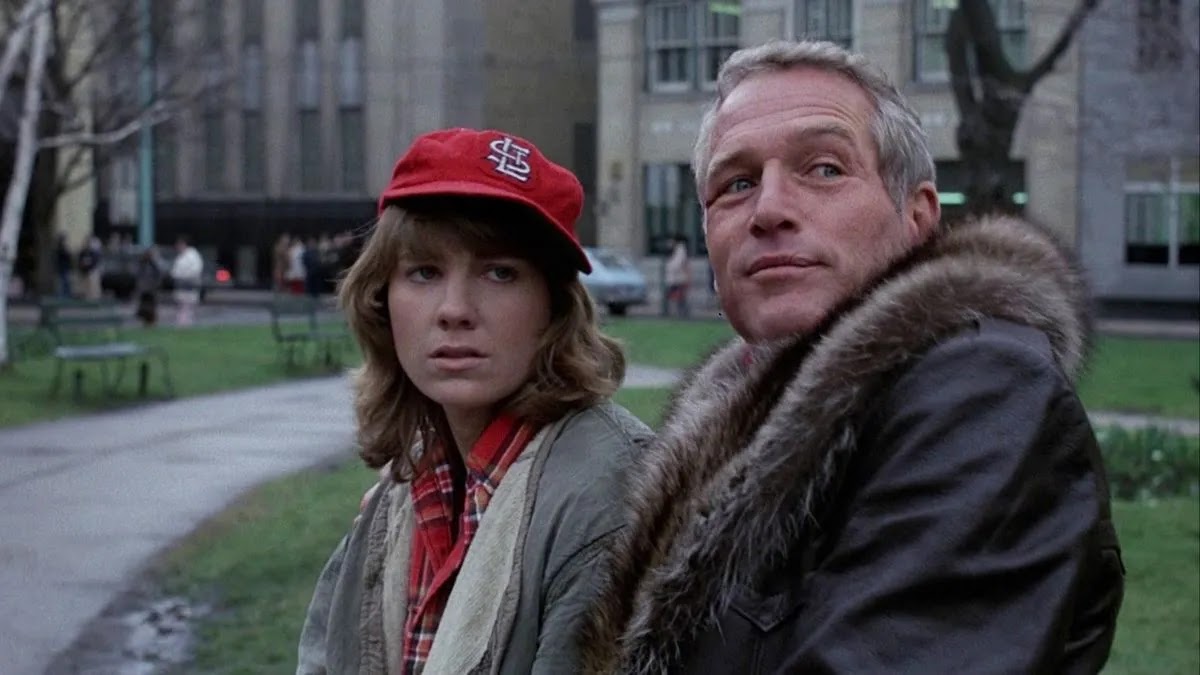
The Charlestown Chiefs
Now, Slap Shot may not be a film suitable for a young child; and, if you're particularly sensitive, it may not be suitable for you either. The film depicts, in my view, a very accurate representation of what a hockey locker room in 1977 might have looked and sounded like. To give you a hint, there is a lot of language that would be considered beyond-the-pale today: lots of "f***s," "d***s", "c***s" and other words we'd never want to utter to someone public in these days. But, before anyone gets too worried about the message of the film, it's very much the opposite of the hyper-violent, hyper-masculine and somewhat bigoted stories of its characters. Slap Shot is actually, secretly, about women, sexual identity and labor in a capitalist society. 

The first hint that the film might be deeper than a simple montage of fighting matches between washed-up pro hockey players, is in the first act when Ned Braden (played by Michael Ontkean) tells coach Reggie Dunlop (played brilliantly by Paul Newman), that the steel mill in Charlestown (the fictional home of the team), is shuttering, and leaving tens of thousands of workers without jobs or income. The writing is on the wall, when the factory goes, the town goes... and so go the Chiefs, Charlestown's hockey team. "These people aren't going to have money to spend on hockey games," Ned says. 

From that point forward Newman's character, Dunlop, hatched scheme after scheme to try to save the team from bankruptcy by using violent antics to bring in frothing crowds of frustrated, angry, blue-collar fans who just want to see their Chiefs kick butt! If the Chiefs can fill the seats, they may just have a chance to stay in business, and the boys on Dunlop's team can continue their careers in the sport they love. Dunlop goes pretty far too; he even goads an opposing player into a fight by suggesting that his wife may prefer women to men -though don't get too mad at him, because that player was very likely abusive to his wife in the first place. If you don't watch and listen carefully, this may all sound a bit crude. However, you must consider that this was a film depicting hockey goons in the 1970's -people weren't as sophisticated back then. And, very importantly, our hero Reggie Dunlop never suggests he has any issue with homosexuality or the LGBTQ community. He just used some language we wouldn't use today. 

Lily (Lindsay Crouse) attempting to cope
One of the most important plot lines of Slap Shot is the story of the women who, despite everything, stand by and tolerate their terrible hockey playing boyfriends and husbands -and, at least one woman who broke free of her marriage and went on to create a wonderful life for herself! If you get the chance to watch this beautiful film, pay close attention to the women. They are more than half of the story. They go through hell to support their partners, showing up in the middle of the night to greet their men when they return, win or lose. One in particular, Lily (played by Lindsay Crouse) has a particularly difficult time dealing with her hockey player partner. Who could blame her?

When I watched the movie as an adult, it made so much sense that the screenplay itself was written by a woman, Nancy Dowd. She had written the script, in part, to tell the story of her own brother's trials in the brutal world of pro hockey. But, she didn't simply succeed in creating a film about hockey. She captured a very broad working class North American experience involving the beauty of the sport, as well as the violence. But, more-than-that, she captured a slice of American and Canadian life that involves the challenges every low-life, good-for-nothing, steel town faces when the big-money company pulls-up anchor and moves out, leaving the workers holding the tab. 

Roy Hill, George. Slap Shot, Universal Pictures, Universal City, California. 1977.   

Popular Items